
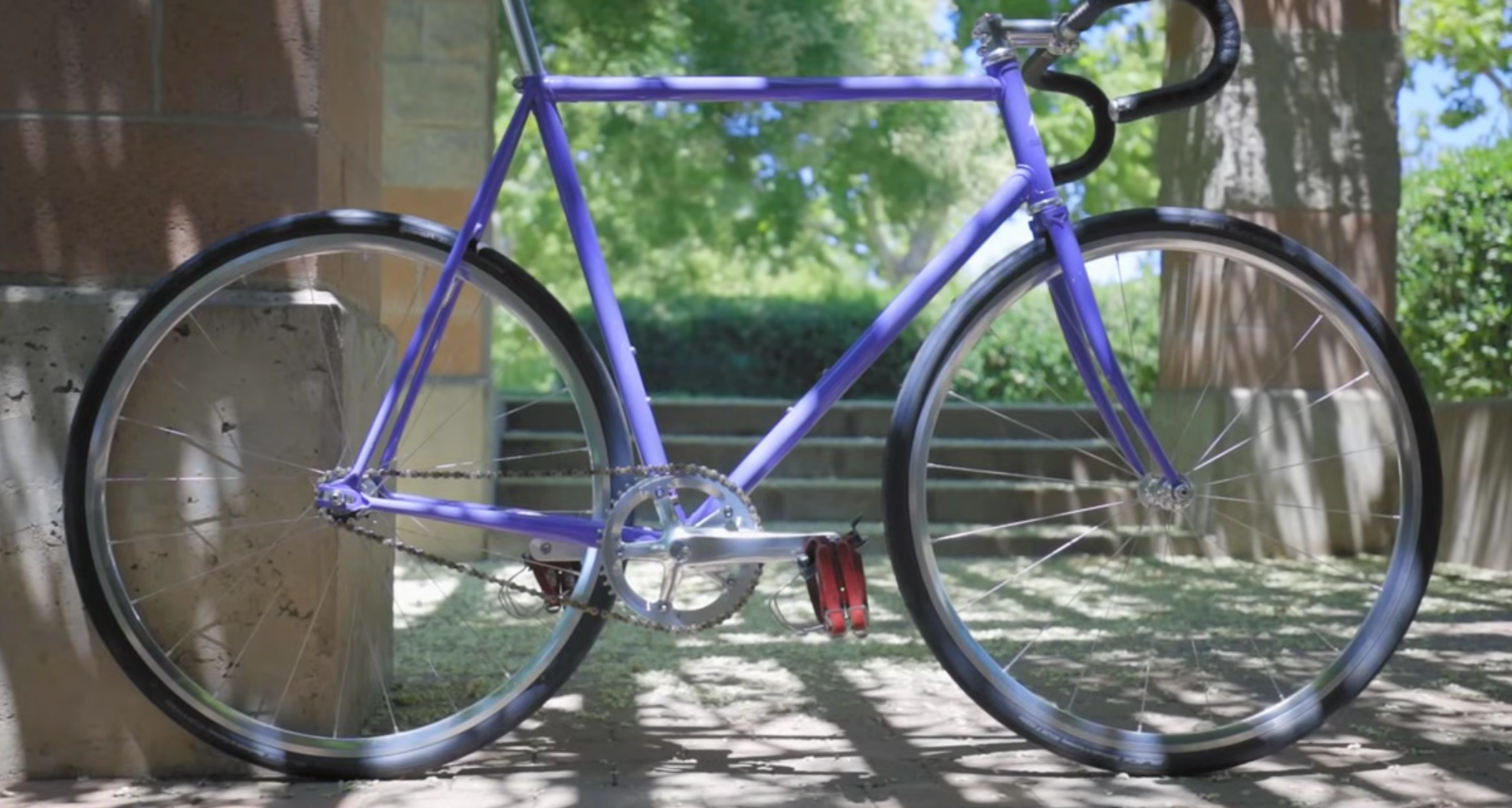
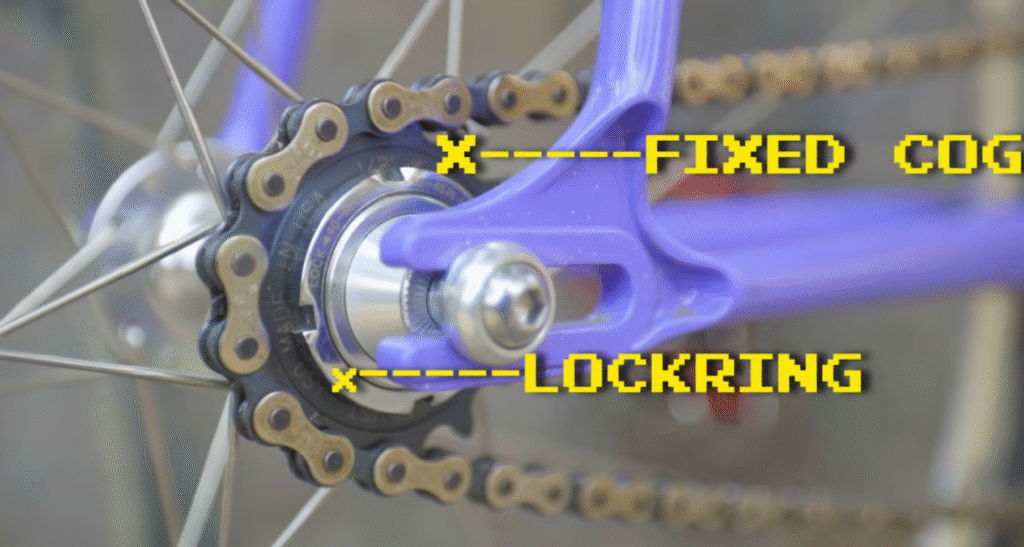
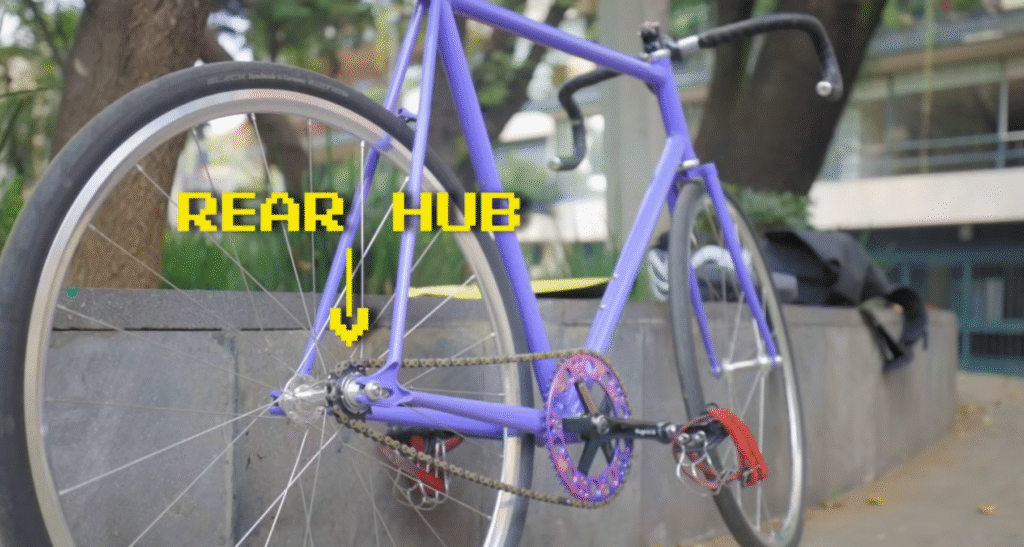
What is Fixed Gear Bike? So, what makes a fixie, a fixie? Basically, it boils down to the drivetrain. A fixed gear bike runs with a fixed cog on the rear hub, and that cog is fastened with a lock ring – hence the terms “fixie” and “fixed gear”. The fixed cog only allows for one single gear ratio. No messing around. And crucially, it does NOT allow for coasting.
Fixie bike definition
A fixie bike, or fixed gear bike, is a bicycle where the rear wheel and the pedals are directly connected, so when the wheel turns the pedals turn too, meaning you can’t coast or “free-ride,” and you control your speed with your legs instead of relying only on brakes; it feels simple, light, and very direct, which is why people who like a pure, connected riding experience enjoy fixies.
You know, coasting is when you stop pedaling but the wheel keeps turning. On a fixie, if the rear wheel is spinning, the cranks are spinning, and your legs are definitely spinning right along with it. And vice versa – you must always, always, always be pedaling.
There’s this direct, unbreakable link between the cranks and the rear wheel. That’s what allows you to do some pretty neat tricks: brakeless riding, riding backwards, and track standing – which is basically just balancing on your bike via sheer willpower, I guess.
On the flip side, though – not being able to coast means you gotta keep pedaling super fast when you’re rolling downhill. Otherwise, you’re just gonna get left behind, and honestly? It can either be a
total sketchy situation or one of the funnest things you’ve ever done, depending on how you look at it.
Yeah, friend – fixie bikes only have a single gear ratio. So if you want to go faster or spin an easier gear when you’re climbing that mountain? Forget it. You’re stuck with what you got. And all you can
really do is… well, harden the hell up. We’re somewhat of a masochistic breed, I’ll be honest. But think of it like this: it’s kind of like a hipster unicycle with two wheels. You’ve probably heard the terms “fixie” and “fixed gear” before. And yeah, us fixie folks, we tend to overcomplicate things and gatekeep a bit from the normies. Some pretentious fixed gear hipsters, like myself, actually find the term “fixie” derogatory and kinda offensive, and we prefer the term “fixed gear”. So, the only way to know for sure if a bike is a bonafide fixed gear bike is to look at the rear hub on the drive side and see if it has a fixed cog fastened by a lock ring. If it does? Then it’s a fixed gear. If it doesn’t? Then it’s not.
Alternatively, you can tell if a bike is fixed gear by giving it a spin – if the pedals keep on turning on their own, regardless of whether you’re pedaling or not, then yeah, it’s fixed.
Different types of fixed gear bikes
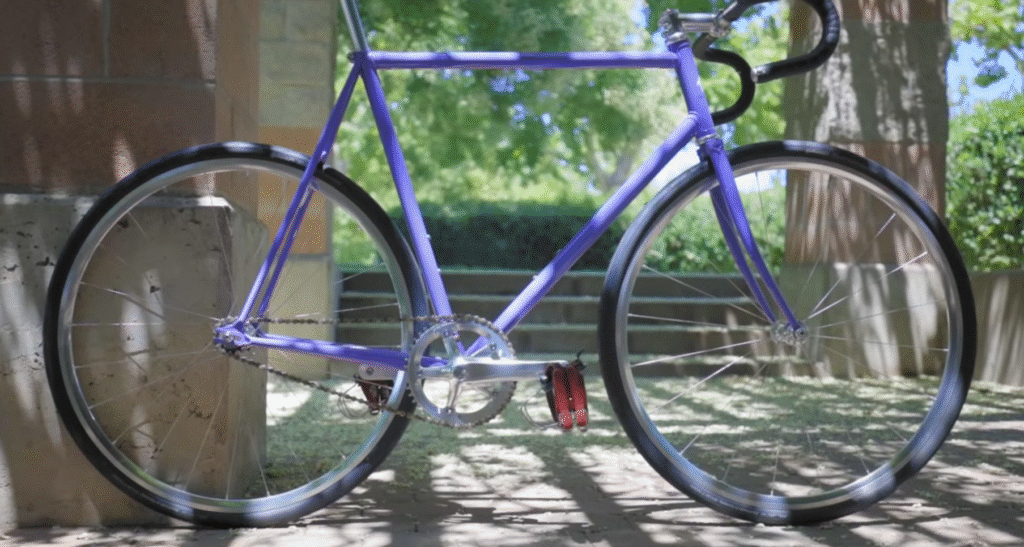
Now, there are a lot of different types of fixed gear bikes out there. We got regular fixed gears designed for street riding, track bikes, track lacrosse bikes, fixed gear freestyle conversions, and even mountain bike conversions. No matter what it looks like – as long as that bike has a fixed cog on the rear hub and the cranks and the rear wheel are directly connected – you’ve got a fixed gear in your hands.
If you’re excited by the minimalism of a fixie and thinking about getting one, you should check out our roundup of the best fixed gear bikes under $1000 to find the perfect starter model.
Fixed gear is something that you either love or you hate. And honestly? New riders can usually tell which side of the fence they fall on within two minutes of hopping on one. It’s a love-or-leave-me-alone thing. So go out there, find a local bike shop, or maybe just hop on one if you can, and try it out. You might just find the most fun experience you’ll ever have riding a bike. It’s intense, sure, but for some of us, it’s pure.
what is the purpose of a fixed cog on the back wheel of a bike?
The purpose of a fixed cog is to eliminate the freewheel and create a 1:1 fixed connection between your pedaling and the rear wheel.
The fixed cog (also called a fixed gear or lockring cog) on the rear wheel of a bicycle is the key component that turns a bike into a fixed-gear (or “fixie”) drivetrain.
Its main purposes and effects:
- Direct, fixed connection between pedals and rear wheel
- The cog is threaded (and usually secured with a lockring) directly onto the hub.
- There is no freewheel mechanism.
- This means:
- Whenever the rear wheel turns → the pedals turn at the same speed.
- Whenever you turn the pedals → the rear wheel turns (forward or backward).
- No coasting
- You cannot coast (pedals stay still while the bike rolls).
- Your legs are always moving in sync with the wheel. This gives a very direct, connected feel to the ride.
- Braking by resisting with your legs (leg braking)
- To slow down or stop, you resist the forward rotation of the pedals (push backward against the motion).
- Skilled riders can slow or stop very smoothly and precisely just with leg pressure.
- Many fixie riders also run a front hand brake, but a large number ride brakeless and rely entirely on backpedaling/resistance for stopping.
- Simplicity and low maintenance
- No derailleur, no shifters, no cassette, no freehub ratcheting mechanism.
- Fewer parts = lighter weight, almost nothing to break or adjust, very quiet ride.
- Used for track racing and trick riding
- Fixed gears are mandatory on velodrome track bikes (no brakes, no freewheel).
- Popular in freestyle/trick scenes because you can pedal backward for certain tricks and have precise control over wheel speed.