

For a city commute, you generally want a “hybrid” bike – something that blends the speed of a road bike with the durability and upright comfort of a mountain bike.
Here are 3 of the best affordable models (typically in the $550–$750 range) that are widely available and highly rated
Trek FX 1 Disc
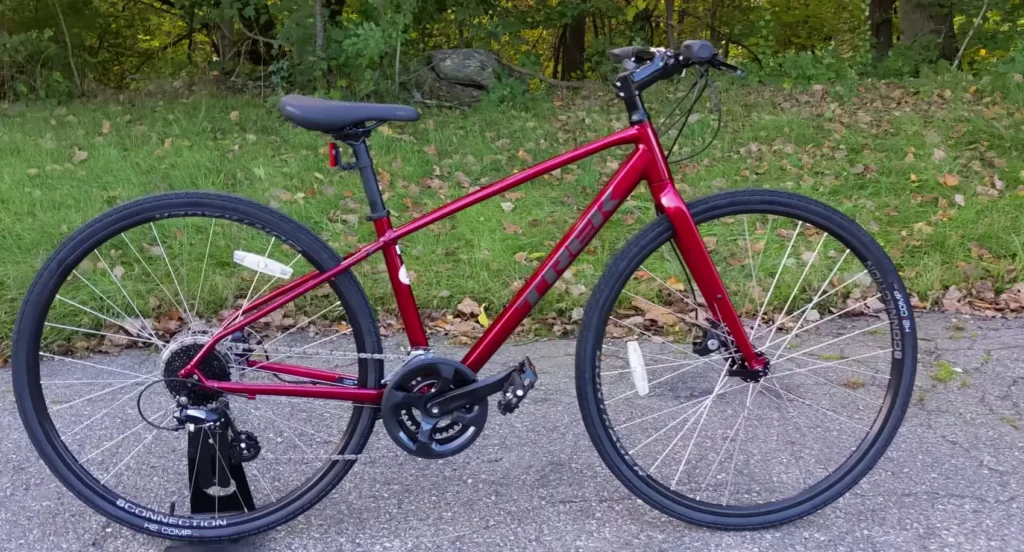
The Sporty & Versatile Choice
The Trek FX series is arguably the most popular hybrid line in the world. The FX 1 Disc is the entry-level model, designed for riders who want a bike that feels fast and nimble but is sturdy enough for daily use. It features a lightweight aluminum frame and internal cable routing (which protects cables from city grime), giving it a sleek, premium look despite the budget price tag.
- Pros:
- Braking: Comes with mechanical disc brakes, which provide much better stopping power in rain and wet city streets than traditional rim brakes.
- Warranty: Trek offers a lifetime warranty on the frame, supported by a massive network of local dealers for repairs.
- Customizable: Built-in mounts make it very easy to bolt on a rear rack, fenders, and a kickstand.
- Cons:
- Stiff Ride: The frame is stiff and the tires are relatively narrow (35mm), so you will feel bumps and potholes more than on the other bikes listed here.
- Basic Components: To keep the price down, some parts (like the pedals and seat) are basic and may need upgrading if you ride long distances.
Co-op Cycles CTY 1.1
The Rugged “Pothole Killer”

Co-op Cycles is REI’s house brand, and the CTY 1.1 is designed specifically for modern urban environments. Unlike the sportier Trek, this bike focuses on stability and toughness. It comes with significantly wider tires (40mm) which act as natural shock absorbers, smoothing out rough pavement and gravel paths.
- Pros:
- Comfort & Stability: The wider tires and upright seating position offer a very stable, confident ride, perfect for navigating traffic.
- Included Support: If you buy from REI, you typically get one year of free adjustments, which is huge for a commuter bike that sees daily wear and tear.
- Gearing: Features a 24-speed Shimano drivetrain with a wide range of gears, making it easy to climb steep city hills.
- Cons:
- Weight: It is heavier than the Trek or Giant, which can be a hassle if you have to carry your bike up stairs to an apartment or office.
- Aesthetic: The design is utilitarian and boxy; it lacks the sporty, streamlined look of the Trek or Cannondale alternatives.
Giant Escape Disc 3
The “Best Bang for Your Buck”
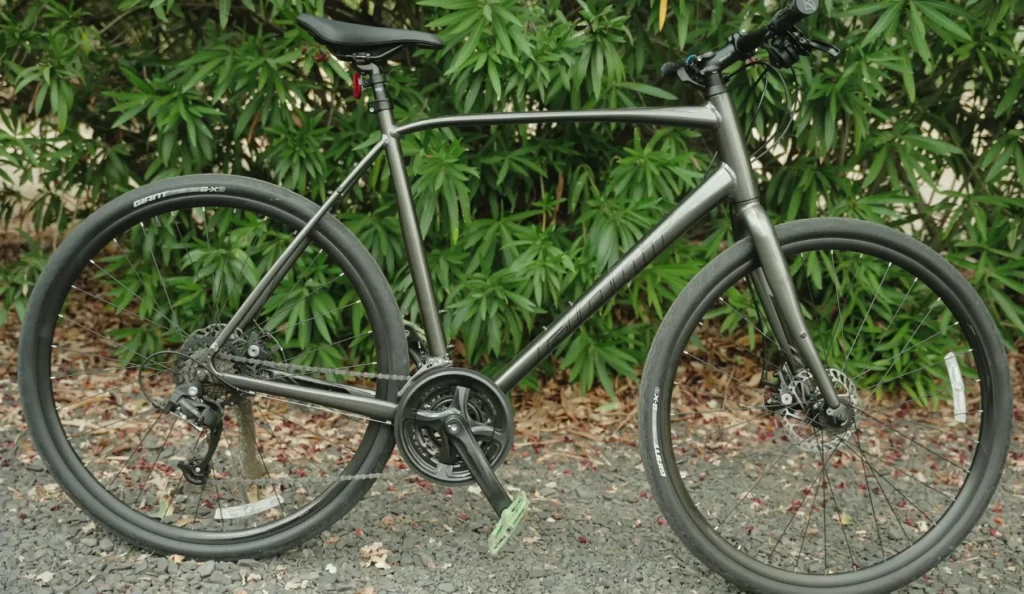
Giant is the world’s largest bike manufacturer, which allows them to offer higher quality specs for a lower price than almost anyone else. The Escape Disc 3 focuses on rider comfort with a more relaxed geometry that puts less strain on your back and neck. It is a fantastic “do-it-all” bike that is equally good for commuting to work and weekend rides in the park.
- Pros:
- Value: Generally offers the best price-to-performance ratio in this category, often coming in slightly cheaper than the Trek while offering similar specs.
- Comfort: The frame geometry is designed to keep you more upright, improving visibility in traffic and reducing back strain.
- Tire Clearance: The frame allows for wider tires (up to 45mm), giving you the option to make the bike even more rugged later on.
- Cons:
- Components: The shifting can feel slightly “clunkier” than higher-end models (using Shimano Tourney components), though it is reliable.
- Availability: Because it is such a high-value bike, it frequently sells out in popular sizes at local bike shops.
Which one should you pick?
- Choose the Trek FX 1 if you have a longer commute and want to get there fast.
- Choose the Co-op CTY 1.1 if your city has terrible roads (potholes/gravel) or you live near an REI.
- Choose the Giant Escape 3 if you want the most comfortable, relaxed ride for the best possible price.