
Trek Madone SLR Disc review
Is the Trek Madone SLR Disc a plush aero machine? Let’s review it!
- Pros: legit aero performance, adjustable IsoSpeed flex, available in rim and disc
- Cons: price, integrated bar might not work for some
- Price: starting at $5,899, tested at $11,899
- Similar: Specialized Venge Disc, Canyon Aeroad Disc, Giant Propel Disc
- Photographed: Elephant Rock
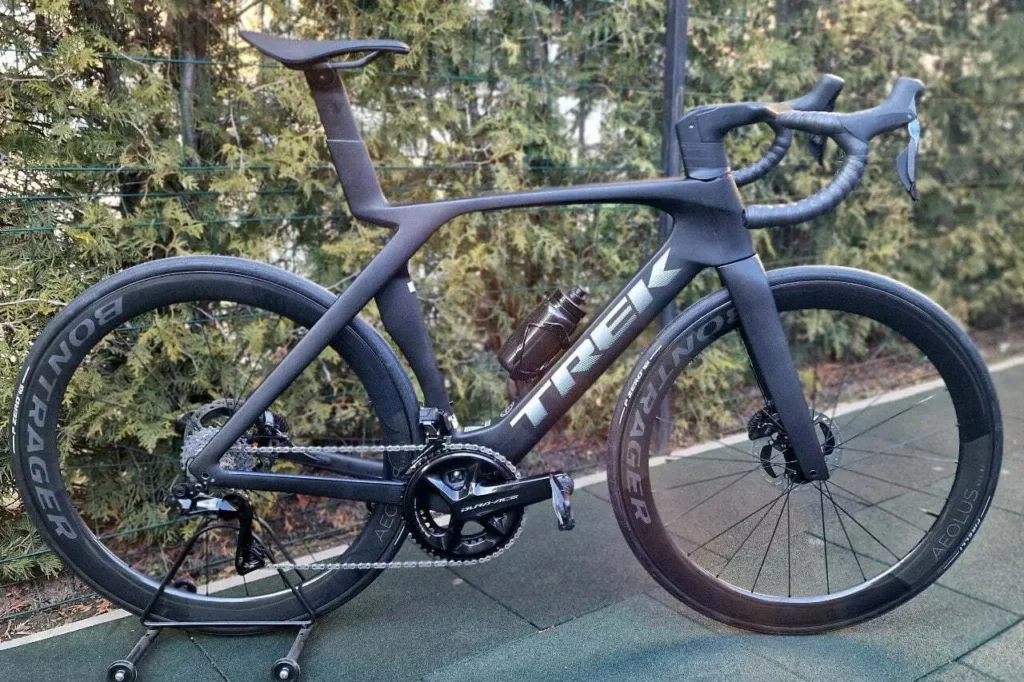
A cushy aero bike?! Yup, it’s true. The adjustable IsoSpeed suspension is what sets this bike apart. For this build, the Bontrager wheels are on par with the best out there, and the tires are close behind. But a bike this expensive should have a power meter. And the bar/stem, while adjustable for angle, still means you better be sure you are sure about your fit measurements before you buy.
Fast and comfortable
Fast or comfortable. This was the choice with early aero bikes, as the deep tubes shapes that worked so well for reducing aerodynamic drag did not work so well for absorbing bumps in the road. Trek changed that with the Madone SLR Disc, which has adjustable flex built into the rear of the bike.
What Trek calls the IsoSpeed Decoupler is a pivot inside the junction of the top tube and seat tube/seat mast, which allows the latter to flex fore and aft without compromising the rigidity of the rest of the bike. On the new bike, you can adjust how much flex you get with Allen keys and a few minutes of work.
Aero everything
Whether Specialized, Trek or Giant, most of the bike companies will tell you their aero bike is the fastest, and that is no different here. Is that the case? Who knows. But after having spent time and done my own testing in wind tunnels in Germany, France, California, Arizona and North Carolina, I can confirm that, yes, aero bikes are indeed faster than round-tube bikes with shallow wheels. But you knew that already.
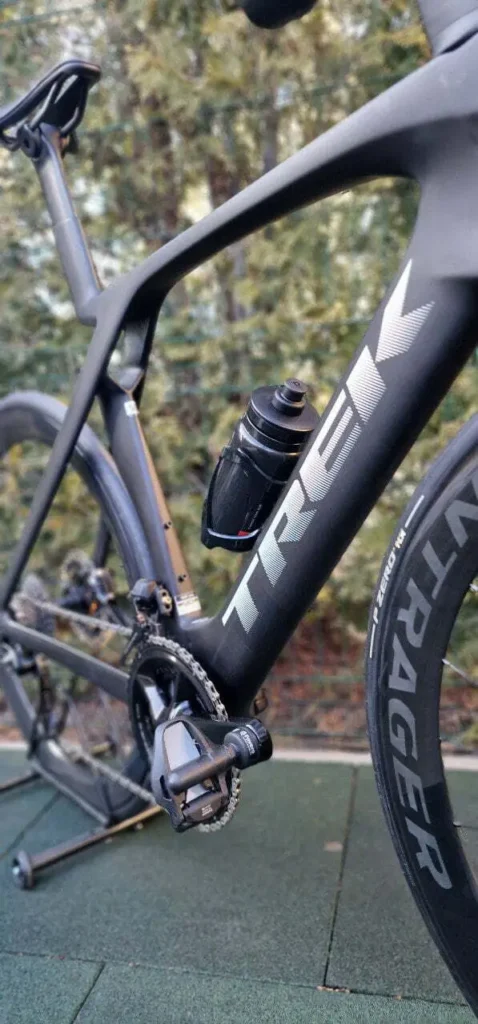
A few basic design features make aero bikes faster: tube shape, internal routing of shift and brake lines, and ovalized and integrated handlebars. As with anything on a bike, each of these things comes with a price and a balance of other characteristics. With the Madone SLR Disc, Trek hedged against most of the compromises.
Huge, oval tubes, for instance, don’t flex much, but the IsoSpeed fixes the comfort issue. Internal routing can make shifting or braking with cables poor if there are tight angles, but electric wires and hydraulic hoses aren’t affected. And the integrated bar/stem greatly limits fit options, but Trek added a +/-5 bar angle adjustment and, critically, offers fit services through its dealers so you order not only the right sized frame but the correct bar/stem length and width.
Fit, feel and physics
Here’s the thing: It doesn’t matter how aero your bike is if you aren’t. How you fit onto your bike is always the most important thing, not just for aerodynamics, of course, but for efficiency and comfort.
Trek has long had two fit geometries: H1 for low-and-pro and H2 for a more upright and sustainable position for more riders. The Madone SLR comes in a Goldilocks middle ground, the H1.5. The middle-of-the-road head-tube height is a good thing in my book.
While the interlocking two-piece spacers are a slick solution for height adjustability without having to redo hydraulic lines, the integrated bar and stem means you can’t just swap in another stem to adjust fit. I can’t stress enough how important it is to have your fit measurements dialed before you buy an aero bike.
A few riders have asked me whether the Madone feels sluggish compared to a standard race bike for accelerations. In terms of perceived snap, the frame lateral stiffness is on par with the best, so there is no pedaling efficiency loss. However the bike is a bit heavier than a standard bike — 18lbs as shown here with pedals; the rim bike is 300g lighter — so a physics equation would show a small disadvantage. And, of course, mo’ weight is always mo’ slow when going uphill.
But… aerodynamics are indeed a thing. And less drag means more speed for the same amount of work.
This is one of cycling’s many balancing acts. What is best for you depends on where you live (Dubai or the Dolomites?) and how you like to ride.
Trek Madone Problems:
While the Trek Madone is praised for its aero performance and sleek design, it’s not without its drawbacks. Riders have reported that the aggressive geometry can be uncomfortable on long rides, especially for those not used to race-oriented setups. The integrated cockpit and proprietary components, while visually clean, can make customization and maintenance more difficult and expensive. Some users also note that the IsoFlow design, introduced in recent models, doesn’t provide as much comfort as expected. Additionally, the high price point makes it less accessible compared to competitors offering similar performance.
Trek domane vs Emonda vs Madone. Which one is the best?
If you’re choosing between Trek’s top-tier road bikes the Domane, Émonda, and Madone — it’s important to understand how they differ in performance, comfort, and intended use. Each bike is built with a specific rider in mind, from endurance riders to competitive racers. Here’s a quick comparison to help you decide which one suits your style best:
- Trek Domane
- Type: Endurance road bike
- Ride Feel: Most comfortable, built for long distances
- Terrain: Rough roads, endurance events
- Weight: Heavier than others
- Key Feature: IsoSpeed decoupler for smoother ride
- Trek Émonda
- Type: Lightweight climbing bike
- Ride Feel: Snappy and agile
- Terrain: Hills, mountains, fast-paced rides
- Weight: Lightest of the three
- Key Feature: Exceptional climbing performance
- Trek Madone
- Type: Aero race bike
- Ride Feel: Stiff and fast
- Terrain: Flat roads, racing, criteriums
- Weight: Heavier than Émonda, lighter than Domane
- Key Feature: Aerodynamic frame and aggressive geometry