
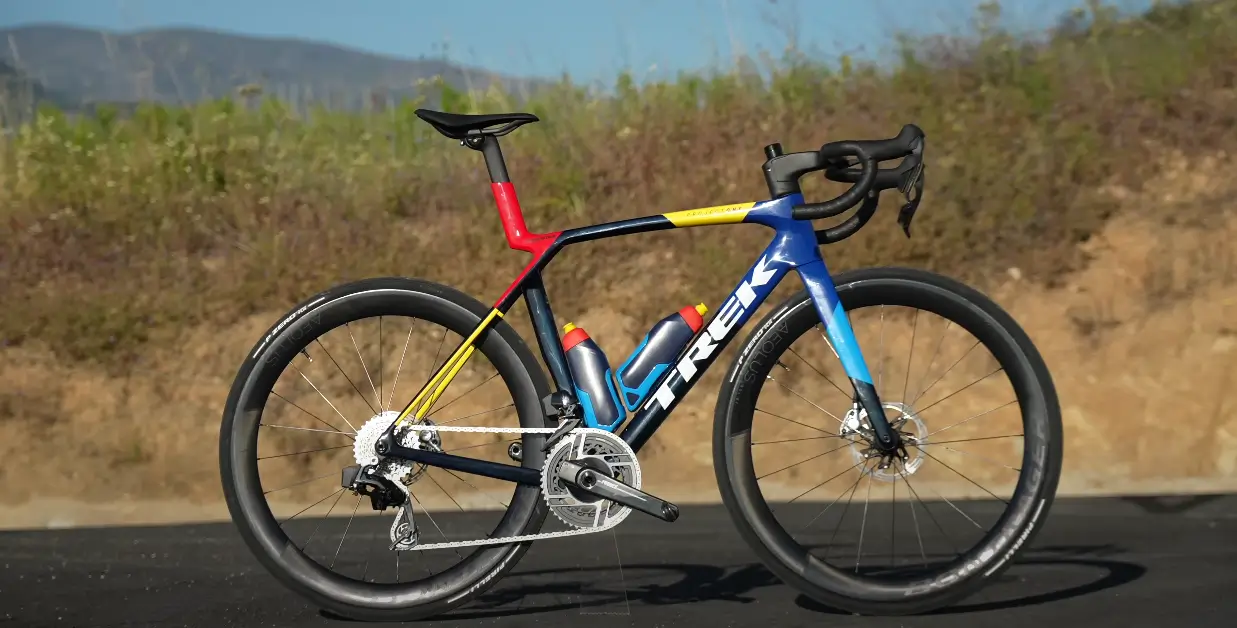
Trek Madone Gen 8 Review: A New Era for Road Racing
Say hello to the brand-new Trek Madone SLR, the eighth-generation race bike from the US-based brand. In an unexpected move, Trek has decided to discontinue the Emonda SLR, merging the aero and lightweight elements into a single bike. This move draws parallels with Specialized’s decision to combine the Venge and Tarmac into one model. Last month, I had the chance to attend the launch event in Spain, where I spent a few days riding the new bike through the scenic roads southwest of Madrid. Let’s dive into the details of what’s new and what makes this bike stand out.
Why Trek Merged the Madone and Emonda
The key storyline of the Madone Gen 8 is its combination of the best features of both the Madone and the Emonda. If you’re coming from an Emonda, the new Madone is just as light but dramatically faster aerodynamically. On the other hand, if you’re upgrading from a previous Madone, the new bike retains the same aero speed but is noticeably lighter. This blend of lightweight and aero performance creates a bike that offers the best of both worlds, catering to a wide range of cyclists and race scenarios.
For those who were fond of the Emonda, it may feel like a loss. But Trek’s aim with this merge is to optimize the performance for all riders. The ride comfort, geometry, and handling that made the Emonda such a popular choice are all retained in the Madone. On top of that, the bike now features significant aerodynamic improvements, making it not only fast but also efficient.
The Lightweight-Aero Challenge
Trek’s engineers began working on the new Madone back in 2021, initially with the goal of enhancing the Emonda. However, as R&D progressed, they realized they could achieve both lightweight and aero improvements simultaneously, leading them to combine elements from both the Madone and Emonda. This shift allowed Trek to make bold improvements in both areas, using new tube shapes, molds, and manufacturing technologies.
For instance, Trek introduced a new one-piece fork using a U-molding process, which resulted in a lighter design. The brand also used bladder technology from previous Madone models to reduce weight while maintaining structural integrity and compliance. The focus was on making the bike not only lighter but also stiffer and more aerodynamic.
IsoFlow: The Trademark Feature
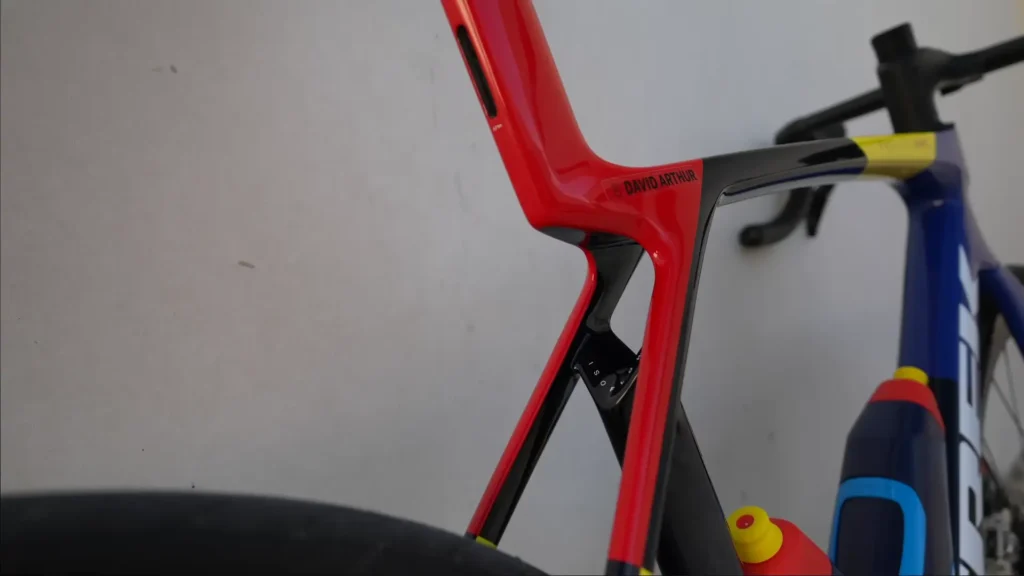
One of the most distinctive features of the Trek Madone remains the IsoFlow it is a hole in the seat tube designed to increase vertical compliance and enhance comfort without compromising aerodynamics. The IsoFlow design results in an 80% increase in vertical compliance compared to the old Madone, and 24% more than the previous Emonda. Trek claims this innovation also leads to improvements in weight and stiffness, making the frame stiffer without sacrificing comfort.
While some initially questioned the durability of the IsoFlow design, Trek’s engineers have rigorously tested it under extreme conditions, ensuring it holds up to the demands of professional cyclists. The bike’s frame has been subjected to loads that would normally break it, but the IsoFlow holds strong, proving its effectiveness.
Weight and Frame Construction
At the heart of the Madone Gen 8 is the impressive weight reduction. Trek claims a size 56 painted frame weighs 796 grams, which is a substantial 370 grams lighter than its predecessor. The fork has also been lightened to 350 grams. Trek achieved these weight savings through a new carbon layup called OCV 900, which offers higher strength and less weight than previous materials.
The new manufacturing process, including a bladder technology designed to prevent imperfections inside the frame, results in a lighter and stronger construction. The fork is molded as a single piece, eliminating the need for extra weight in bonding. Despite these improvements, some cyclists may find the new Madone to be heavier than some competitors. For instance, it’s about the same weight as the previous Madone and heavier than the Emonda.
However, Trek’s goal was to create a versatile bike that performs exceptionally well in all areas it is climbing, sprinting, and aerodynamics. The compromise is in weight, which may not satisfy riders focused on building the lightest bike possible. The bike weighs around 7.34 kg with SRAM Red AXS components, which is heavier than some direct competitors in the aero/lightweight category.
Aero Performance: No Compromise
Trek has focused on maintaining the same level of aerodynamic performance as the previous generation Madone, without making it more aero. Instead, the company prioritized a balance between lightweight and aero features. According to Trek, the new Madone saves 30 watts over the previous Madone at 22 mph, 43 watts at 34 mph, and 74 watts at 40 mph. These improvements come from the updated tube shapes, wider handlebars, and the new aero water bottle design, which saves an additional 3 watts.
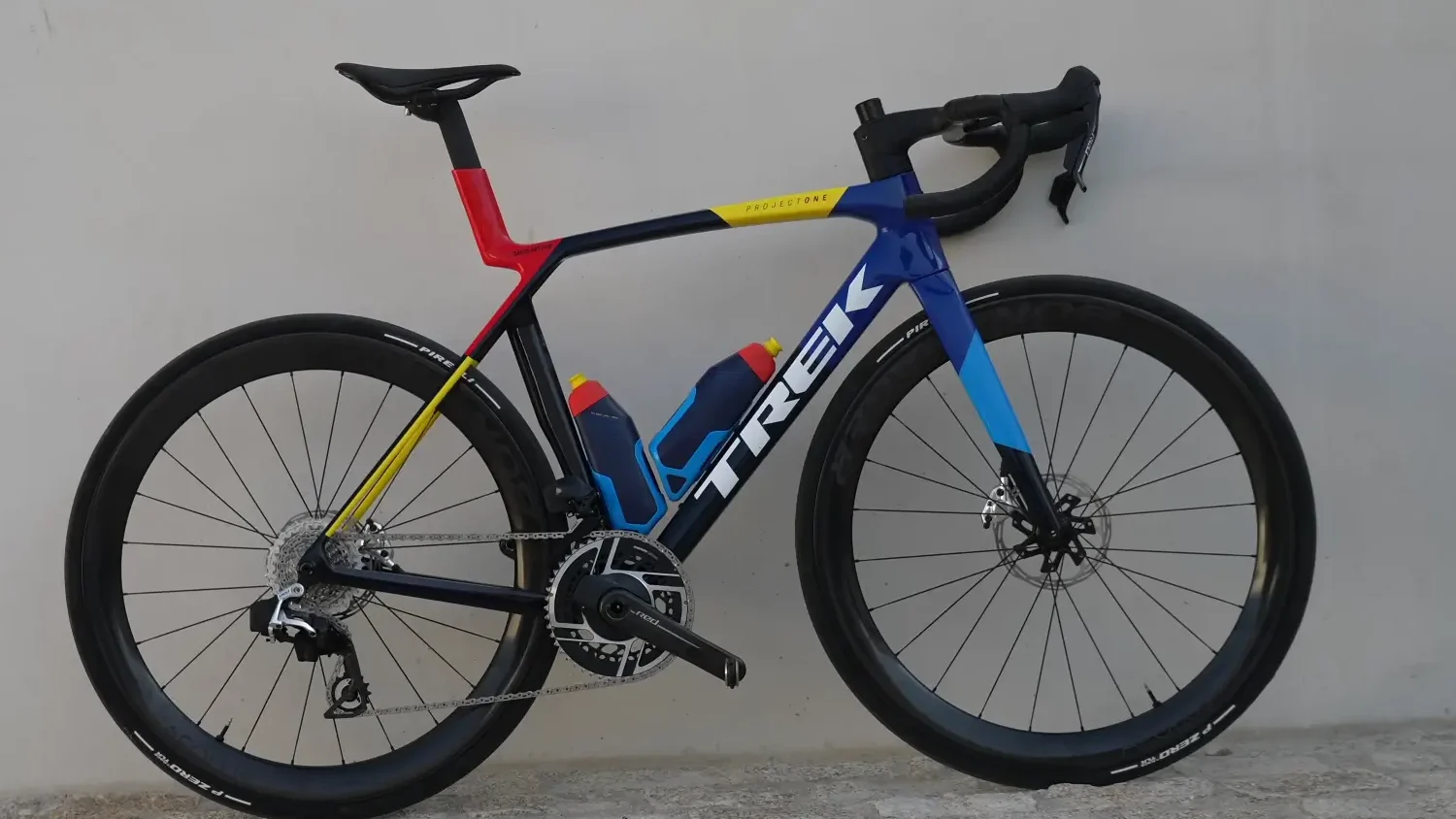
The new handlebars feature narrower grips at the hoods, which help reduce drag, and the wider drops provide more control when descending. The result is a bike that’s faster on the flat and more responsive when riding out of the saddle. The improvements are incremental but noticeable, and they contribute to a bike that’s both fast and efficient in various riding conditions.
New Standards and Geometry
One of the more practical updates is the adoption of a T47 threaded bottom bracket and a new SRAM UDH hanger, which improves durability and ease of maintenance. Trek has also standardized headset bearings across their entire road bike range, simplifying service for mechanics and riders alike.
Trek has revised the geometry of the Madone, reducing the number of sizes from eight to six. The 52 and 54 cm sizes are now more distinct, which helps cyclists find their optimal fit. The geometry still includes the H1.5 Slam, which is typical for a race bike, ensuring that the Madone remains aggressive and responsive.
Pricing and Availability
The Madone SLR comes in several builds, starting with the SL model, which uses a lower grade carbon fiber but retains many of the same features. Prices for the SL range start at $3,500, while the SLR range begins at $6,400 and can go up to $13,500 for the top-of-the-line model. For those looking for a more budget-friendly option, there’s also a frame set available, with prices starting at $3,800 for the SL and $6,000 for the SLR.
if you need more information about bicycles you can find it here Best Fixed Gear Bikes Under $1000 and Best endurance road bike under $2000
While the Madone SLR offers top performance, the price tag may be a deterrent for many riders. However, for those who can afford it, the Madone delivers exceptional performance in both aero and lightweight categories.
Is the Trek Madone Gen 8 Worth It?
The Trek Madone Gen 8 is an ambitious attempt to merge the best of both aero and lightweight bike worlds into one platform. It delivers excellent aerodynamic performance, retains much of the Emonda’s lightweight feel, and offers improvements in comfort and stiffness. It’s not the lightest bike on the market, and for weight-focused cyclists, it may not be the best choice compared to competitors like Specialized’s Tarmac SL8 or Pinarello’s Dogma F.
Still, the Madone is a fantastic all-around race bike that excels in multiple categories. It’s a bike that will suit most road cyclists, from amateur racers to seasoned pros. However, further testing in varied conditions will be needed to fully understand the improvements in ride comfort, especially in terms of compliance. If you’re looking for one bike that does it all, the Trek Madone Gen 8 is certainly a strong contender.