
If you’ve ever hopped on a fixed gear bike (a fixie), one of the first questions that comes to mind is simple: how do you stop?
Unlike freewheel bikes, fixed gears keep your pedals moving as long as your wheels are turning. That means no coasting – and no simple brake tap to come to a stop. But don’t worry – there are several reliable ways to slow down or stop completely.
A Quick Safety Note
Before diving in, remember: fixed gear bikes can be dangerous if you push beyond your limits.
Always wear a helmet, practice in an empty parking lot, and follow your local cycling laws. The goal is to learn control — not to crash.
1. The Skip Hop
The skip hop is one of the simplest ways to slow down. You slightly lift the back wheel off the ground and let it drop – that quick interruption in motion helps reduce your speed.
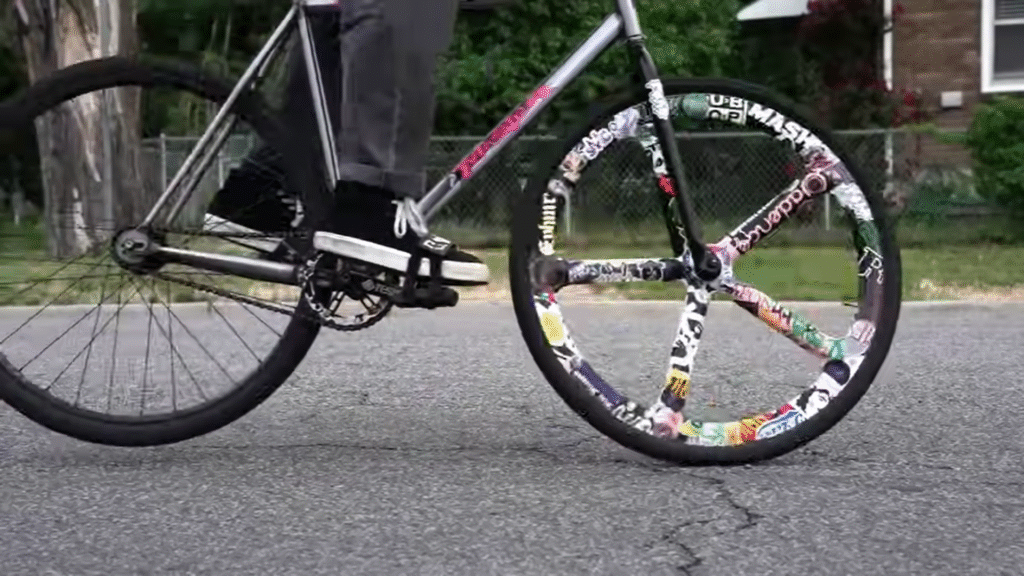
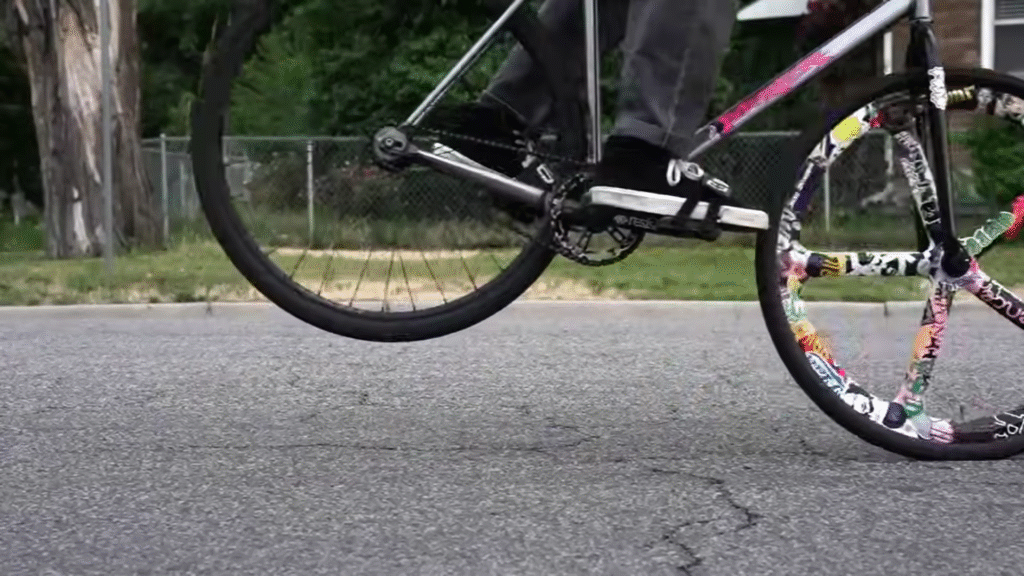
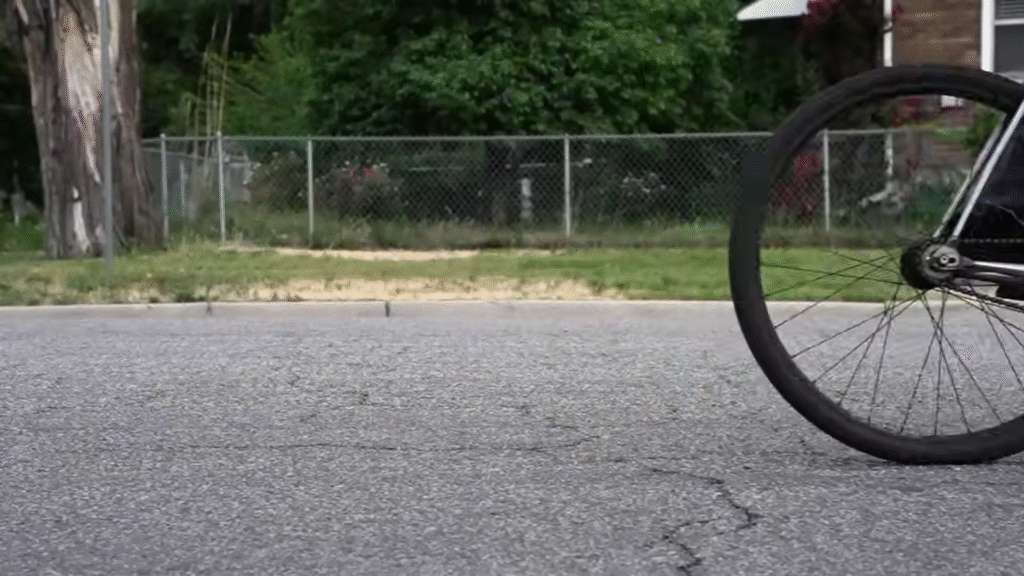
It’s not the smoothest or most elegant move, and most experienced riders only use it in emergencies. The advantage is that it can be done in half-pedal strokes, so you can react faster than waiting for a full crank rotation.
Still, it’s not ideal for everyday street riding – more of a “just in case” tool to keep in your back pocket.
2. The Backpedal Resistance
Also called resisting, this is the most instinctive way to slow down on a fixie. Instead of pedaling forward, you apply backward pressure to the cranks. It’s essentially the opposite of accelerating.
It takes some leg strength and finesse to do well, and it works best when combined with other methods like skids.
However, as bombing down a steep hill – backpedal resistance alone can get sketchy fast. Without another way to slow down, it’s easy to lose control, wobble, or bounce around dangerously. It’s great for maintaining speed or gentle slowing, but not for emergency stops.
3. Use Your Brakes (Yes, Really)
Let’s be clear: brakes are the most effective and safest way to stop any bicycle, fixie or not.

There’s a persistent stigma in some parts of the fixed-gear community that running brakes is “uncool.” But that’s pure nonsense. Whether you’re a beginner or a seasoned rider, there’s absolutely no shame in using brakes.
If you only want one brake, run the front brake – it offers the most stopping power. But use it carefully; grabbing a handful too suddenly can send you over the bars.
The bottom line: if you value your teeth and your tires, brakes are your best friend.
4. The Skid
The skid is the move that defines fixie culture. It’s flashy, fast, and – when done right – surprisingly effective.
To skid, you lock up your rear wheel by resisting the pedals while shifting your weight just right. The tire slides along the pavement, slowing you down.
However, the effectiveness of a skid depends on a few key factors:
- Tire size – Bigger tires grip more but are harder to skid.
- Surface material – Asphalt gives more traction than concrete; dust or rain makes everything slippery.
- Weather – Wet or icy conditions make skids unpredictable.
Pro tip: short, controlled skids work better and save your tires. Long 40- or 50-foot slides might look cool, but they’ll chew through rubber fast.
Even better, learn to skid with both feet. It’s not just for style – it lets you react quicker in emergencies, without waiting for your crank to rotate to your “strong” foot.
5. The Foot-on-Tire Stop (aka the Ted Shred)
This one’s equal parts clever and destructive. You take your front foot off the pedal and press it against the rear tire to slow it down.
Done lightly, it adds some resistance. Press down harder, and you can fully lock the wheel – essentially a skid powered by your shoe.
It’s simple, fun, and undeniably cool… but it destroys your shoes. One or two stops like this, and your soles will be shredded. It also smells terrible (rubber on rubber – enough said).
So while it’s a solid lazy-day trick, save it for those “just cruising” moments, not your everyday commute.
🚫 What Not to Do
There are a few ways to “stop” that you should never rely on:
- Falling: Technically, yes, you’ll stop. But also — don’t.
- Over-the-bars skids: Leaning too far forward makes skids easier but puts you at serious risk of flipping over.
- Foot jams: Fun for tricks, terrible for speed. Trying one at any real pace could end very badly.
Stick to proven techniques that give you control, not chaos.
Bonus Tip: Always Use Foot Retention
Whether you’re skidding, hopping, or resisting, foot straps or clipless pedals make a huge difference. They keep your feet connected to the cranks, giving you more control and leverage – especially when pulling up to slow down.
Without them, your feet can slip right off the pedals when things get rough.
Master the skidding technique is essential for safety, but remember that fixed gear bikes require practice. If you’ve been practicing braking and are ready to invest in a bike of your own, finding the right model is the next step. Our latest guide covers the best fixed gear bikes on the market for riders of all skill levels.
Final Thoughts
Stopping on a fixie isn’t just about technique — it’s about control, awareness, and practice. Every rider develops their own rhythm, but learning these five core methods (and knowing which ones to avoid) can make every ride safer and more fun.
And remember: “Ride within your limits, wear a helmet, and just have fun out there.”
what does it mean to backpedal a bike?
Backpedaling on a bike means pedaling backwards (turning the pedals in the reverse direction).
What it does depends on the type of bike you’re riding:
- Fixed-gear (fixie) bike
- There’s no freewheel, so the pedals are directly connected to the rear wheel.
- If you backpedal, the bike slows down or stops because you’re actively resisting the wheel’s forward motion with your legs.
- Skilled riders use controlled backpedaling (applying backward pressure) to slow down, stop, or even do tricks like skid stops (locking the rear wheel to skid).
- Single-speed bike with a freewheel or coaster brake
- Backpedaling usually activates a coaster brake (a brake built into the rear hub).
- When you push the pedals backward, it engages the brake inside the hub and stops the bike (common on kids’ bikes, beach cruisers, etc.).
- If it has a regular freewheel (no coaster brake), backpedaling does nothing—the pedals just spin freely backward and the bike coasts.
- Multi-gear bike (with derailleur and freehub)
- Backpedaling does nothing useful. The freehub lets the cassette spin forward while coasting, so pedaling backward just spins the pedals and chain without affecting the wheel.
- The chain might make some noise or slack, but it won’t brake or slow the bike.
In short:
- On a fixie → backpedaling = braking/control.
- On a coaster-brake bike → backpedaling = braking.
- On a normal geared bike → backpedaling = pointless spinning.
So when someone says “I backpedaled to stop,” they’re almost always talking about a fixed-gear bike or a coaster-brake bike.